The Great Unplugging: How the US Ban on Foreign Robots and Solar Tech Backfires
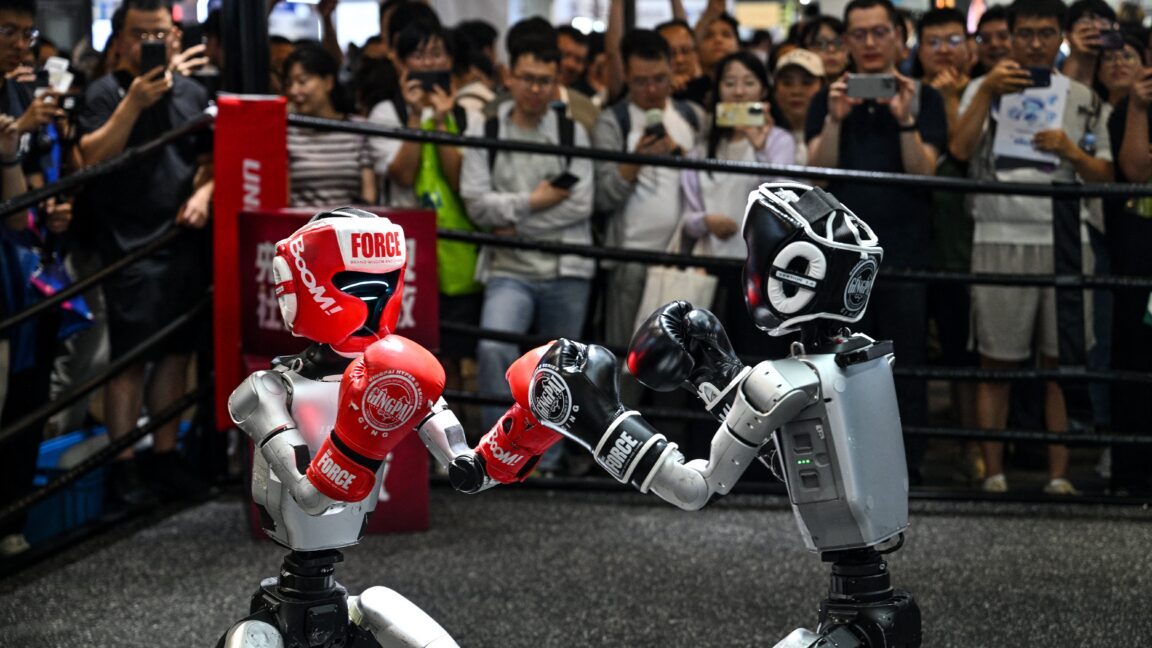
The US government's sweeping ban on foreign-made humanoid robots, robot dogs, and solar inverters, citing national security, risks crippling domestic innovation. While intended to curb Chinese dominance, the policy inadvertently targets consumer vacuums and exposes the fragility of US supply chains.
The Illusion of Security in a Connected World
In a move that has sent shockwaves through the global technology sector, the United States government has enacted a sweeping ban on the import of "advanced robotic devices" and solar inverters from foreign nations. Officially justified as a critical measure to protect national security, the decree largely targets Chinese manufacturers who currently dominate the global markets for humanoid robots, quadrupedal "robot dogs," and the essential electronics powering the solar revolution. However, beneath the surface of this geopolitical maneuver lies a complex reality where the pursuit of security may be inadvertently strangling domestic innovation and consumer choice.
The announcement, driven by the Trump administration, was initially framed around high-profile humanoids and military-grade surveillance risks. Yet, as The Verge reported, the scope of the ban extends far beyond the sci-fi visions of autonomous soldiers. The Federal Communications Commission (FCC) clarified that the ban sweeps up consumer-grade devices, including robot vacuum cleaners like the ubiquitous Roomba, if they are manufactured abroad. As FCC media relations director Katie Gorscak confirmed, "spying doesn't require legs - and neither does the FCC's robot ban." This broad-brush approach suggests a regulatory overreach that conflates high-stakes industrial espionage with everyday household appliances.
![https://cdn.arstechnica.net/wp-content/uploads/2026/07/Unitree-robots-boxing-1152x648.jpg]
The Economic Paradox: Who Actually Wins?
The immediate question arising from this policy is who stands to gain and who will suffer. On paper, the logic is sound: protect US infrastructure from potential backdoors embedded in foreign hardware. In practice, the economic fallout tells a different story. Ars Technica's analysis suggests that the ban may "hinder instead of help" the US robotics industry. By cutting off access to the most advanced, cost-effective components and finished goods from China, US developers are left scrambling to build domestic alternatives that do not yet exist at scale.
China currently holds a near-monopoly on the manufacturing of humanoid robots and solar inverters. The sudden removal of these products from the US market creates a vacuum. Domestic manufacturers, many of whom rely on global supply chains for critical components, face immediate disruption. The result is likely to be a slowdown in the deployment of automation technologies in US warehouses, construction sites, and homes, effectively delaying the very productivity gains the US hopes to achieve through technological leadership.
Furthermore, the ban on solar inverters strikes a blow to the green energy transition. These devices are the "brains" of solar systems, converting DC power to AC. With foreign options barred, US solar projects face potential delays and cost overruns, potentially undermining the nation's climate goals. The policy assumes that US industry can instantly fill the gap, an assumption that ignores the years of R&D and supply chain development required to build a competitive domestic ecosystem.
The Broader Context: From Vacuums to Crypto
This regulatory crackdown does not exist in a vacuum; it is part of a broader trend of increased scrutiny on all forms of autonomous and connected technology. The same week the robot ban was announced, Waymo, a leader in autonomous vehicle technology, resumed operations on freeways after a pause. This restart comes amid heightened scrutiny regarding how self-driving vehicles behave in high-traffic situations and around emergency responders. While Waymo is a domestic entity, the regulatory environment is becoming increasingly hostile to any autonomous system that cannot be fully vetted by US standards, regardless of origin.
The paranoia regarding foreign technology extends even to the digital realm. In a related development, researchers using the Mythos framework uncovered a fatal weakness in the HAWK post-quantum cryptography (PQC) algorithm candidate. This discovery, which went unknown for years, highlights the pervasive nature of security vulnerabilities, whether in physical hardware or mathematical code. The Mythos attack on HAWK serves as a grim reminder that security is a continuous process, not a one-time certification. While the US ban attempts to solve hardware security by exclusion, the HAWK incident proves that even trusted, domestically vetted systems can harbor hidden flaws.
![https://cdn.arstechnica.net/wp-content/uploads/2026/07/broken-encryption-lock-1152x648.jpg]
Expert Perspectives: A Strategic Miscalculation?
Experts warn that this "scorched earth" approach to technology imports may be a strategic miscalculation. The argument for banning foreign robots relies on the premise that foreign entities are actively embedding spyware. While this risk is real, the blanket ban ignores the nuance of modern global trade. It treats a robot vacuum cleaner with the same suspicion as a military-grade surveillance drone.
"The ban largely affects U.S. imports from China, which currently dominates the global market," noted TechCrunch. "The unintended consequence is that US companies lose the competitive edge provided by these advanced tools."
The robotics community is particularly vocal. Developers who rely on platforms like Unitree or other Chinese manufacturers for prototyping and research now face an uncertain future. Without access to these affordable, high-performance robots, the pace of innovation in the US could stall. The ban effectively creates a "tech isolationism" that contradicts the open, collaborative nature required for rapid technological advancement.
The Road Ahead: Adaptation or Stagnation?
As the dust settles on this regulatory storm, the US technology sector faces a crossroads. The immediate effect will be a shortage of specific hardware and a spike in costs for solar and robotics projects. Over the long term, the outcome depends on whether the US can successfully pivot to domestic manufacturing. If the government pairs this ban with massive investment in domestic R&D and supply chain resilience, it might eventually foster a self-sufficient industry. However, without such support, the ban risks becoming a self-fulfilling prophecy of stagnation.
The situation mirrors the historical challenges of trade wars: short-term protectionism often leads to long-term inefficiency. The US government's attempt to secure its borders against foreign tech giants may end up securing a future where American innovation is left behind, waiting for the rest of the world to catch up to a technology it once led.
As the debate continues, one thing is clear: the era of unfettered global technology flow is over. The new era is defined by suspicion, regulation, and the difficult balance between security and progress. Whether the US emerges stronger or weaker from this confrontation remains the defining question of the decade.
![https://cdn.arstechnica.net/wp-content/uploads/2026/07/Unitree-robots-boxing-1152x648.jpg]
Sources
- Mythos attack on 3rd-round PQC algorithm candidate puts it out of commission
- Who wins and who loses after US bans foreign robots?
- The US government just banned Roombas
- Waymo robotaxis are starting to return to freeways
- US government bans new foreign-made humanoids, robot dogs, and solar inverters, citing risks to national security