The AI Infrastructure Squeeze: A Perfect Storm of Cost, Regulation, and Security
As Google commits $920 million monthly to SpaceX for compute, the AI industry faces a paradox: unprecedented demand meets a crumbling infrastructure. From New York's data center moratorium to the NSA's controversial adoption of restricted models, the sector is reeling from regulatory backlash, spiraling costs, and evolving cyber threats.
The AI Infrastructure Squeeze: A Perfect Storm of Cost, Regulation, and Security
The AI gold rush has entered a perilous new phase. For years, the narrative was simple: build faster, scale bigger, and let the chips fly. But in mid-2026, that narrative has shattered. The industry is now caught in a pincer movement of astronomical costs, aggressive regulatory pushback, and sophisticated security breaches. The era of "move fast and break things" is over, replaced by a desperate scramble to secure the physical and digital foundations of artificial intelligence.
The Compute Arms Race: A $920 Million Monthly Tab
The scale of the financial commitment required to sustain AI growth is staggering. In a deal that underscores the desperation for compute capacity, Google has agreed to pay SpaceX $920 million per month for computing power. Announced just one week ahead of SpaceX's historic IPO, this agreement signals a fundamental shift in how hyperscalers view infrastructure.
This is no longer just about buying GPUs; it is about securing the entire supply chain, including satellite-based data transmission and potential orbital compute nodes. As TechCrunch reports, this move highlights a critical bottleneck: traditional data center expansion cannot keep pace with the exponential demand for training and inference. The industry is literally paying billions to buy time, hoping to maintain momentum while the physical world struggles to catch up.
However, the financial reality is only half the story. The other half is the fierce resistance from local communities and governments who bear the brunt of this expansion.
The Regulatory Backlash: "We Pissed Off a Lot of People"
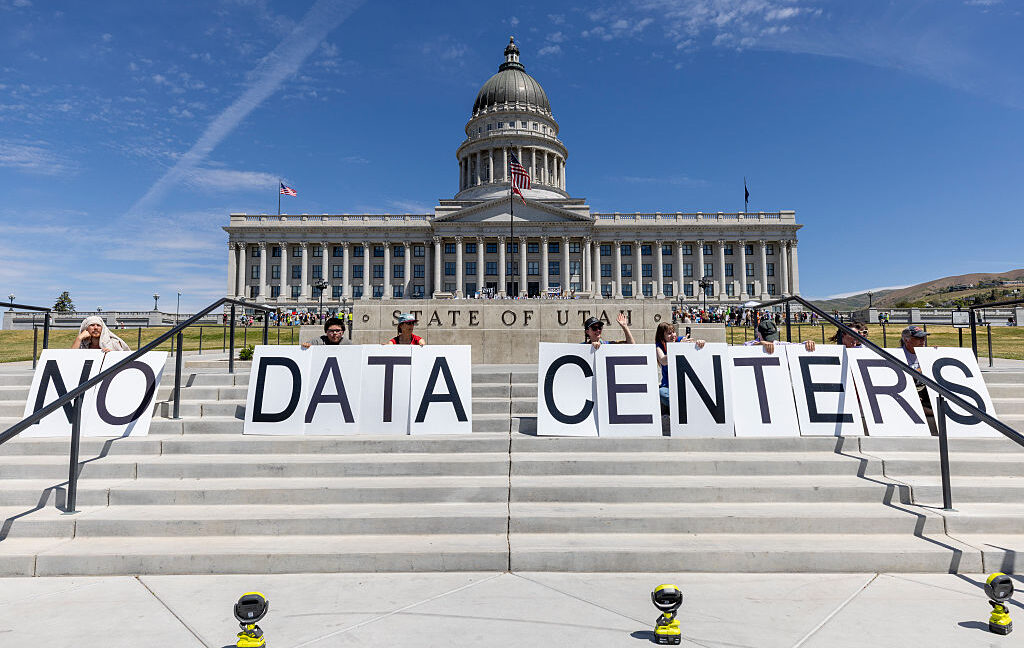
The push for infinite compute has collided violently with the limits of energy grids and local zoning laws. A recent Ars Technica report details the plight of a major data center developer who saw their plan cut by 50% following intense local protests.
"We felt beaten up," the developer admitted. "We had no choice but to shrink the project. We pissed off a lot of people."
This sentiment is not isolated; it is becoming a national trend. In a landmark move, New York lawmakers have passed a one-year moratorium on new large data centers. If signed by Governor Kathy Hochul, this will be the first statewide ban of its kind. The legislation aims to pause the rush to build, giving policymakers time to assess the environmental impact and the strain on energy prices.
This regulatory freeze creates a paradoxical situation: while tech giants are willing to pay nearly a billion dollars a month for compute, they are increasingly unable to build the physical plants to house it. The "token bill" is coming due, as TechCrunch notes, shifting the industry conversation from "tokenmaxxing" and "go fast" to a frantic search for guardrails and cost controls. The era of unchecked expansion is ending, replaced by a era of constrained growth and political friction.
The Security Paradox: When AI Becomes the Weapon
While regulators and developers fight over concrete and copper, a more insidious threat is emerging: the weaponization of AI itself. The security landscape is shifting from protecting data to protecting the AI models that process it.
Recent reports from the NSA indicate a controversial development: the agency is reportedly preparing Anthropic's Mythos model for use in cyber operations. This is particularly striking given the federal ban on using the AI model maker for certain government functions. This suggests that national security agencies are willing to bypass restrictions to gain a tactical edge, raising profound ethical and legal questions about the dual-use nature of advanced AI.
However, the threat is not just from state actors. A recent hack of Meta's AI customer support agent demonstrates how consumer-facing AI can be weaponized by bad actors. Attackers successfully tricked the agent into linking Instagram accounts to email addresses they controlled, effectively stealing accounts with simple prompts. In one chilling instance, an attacker breached the dormant White House account of former President Obama to post pro-Iran propaganda.
As MIT Technology Review highlights, this incident proves that AI security is more than just Mythos. The vulnerability lies in the interaction layer. When AI agents are given the power to execute administrative tasks without robust human-in-the-loop verification, they become the weakest link in the security chain. The same technology that promises efficiency is creating new attack vectors that traditional firewalls cannot stop.
The Convergence: A Sector at a Crossroads
The intersection of these three forces—cost, regulation, and security—creates a perfect storm for the AI industry. The $920 million monthly check to SpaceX is a symptom of a broken supply chain. The New York moratorium and the 50% cut to data center plans are the immune system of society reacting to an unchecked growth spurt. And the NSA's adoption of restricted models alongside the Meta hack reveal a security landscape where the tools of defense are being repurposed for offense, often with catastrophic side effects.
The industry is scrambling to manage AI's runaway costs. The conversation has fundamentally shifted. It is no longer about who can train the biggest model; it is about who can do so within the constraints of a hostile regulatory environment, a strained energy grid, and a security landscape rife with novel threats.
Looking Forward: The Path to Maturity
What does the future hold? The next few years will likely see a consolidation of the AI sector. Smaller players without the capital to pay SpaceX's premium rates or navigate complex regulatory labyrinths may be forced out. We may see a rise in "sovereign AI" models, where governments build their own infrastructure to bypass private sector bottlenecks and security concerns.
Furthermore, the security implications will drive a new wave of regulation. The Meta hack and the NSA's activities will likely prompt Congress to draft stricter laws regarding AI agent permissions and the export of dual-use models. The industry must move from a mindset of "growth at all costs" to "resilience at all costs."
The AI revolution is not slowing down, but it is changing shape. It is becoming more expensive, more regulated, and more dangerous. The companies that survive this squeeze will be those that can balance the insatiable demand for compute with the hard realities of physics, law, and security. The age of easy AI is over; the age of difficult, expensive, and carefully managed AI has begun.
Sources
- Google will pay SpaceX $920M per month for compute
- "We pissed off a lot of people": Giant data center plan cut 50% amid protests
- New York lawmakers pass one-year ban on new data centers
- The token bill comes due: Inside the industry scramble to manage AI’s runaway costs
- NSA said to be readying Anthropic’s Mythos for use in cyber operations
- The Download: AI hacking beyond Mythos, and chatbots’ impact on our brains
- The Meta hack shows there’s more to AI security than Mythos