The AI Infrastructure Crisis: Tents, Fusion, and the Limits of Growth
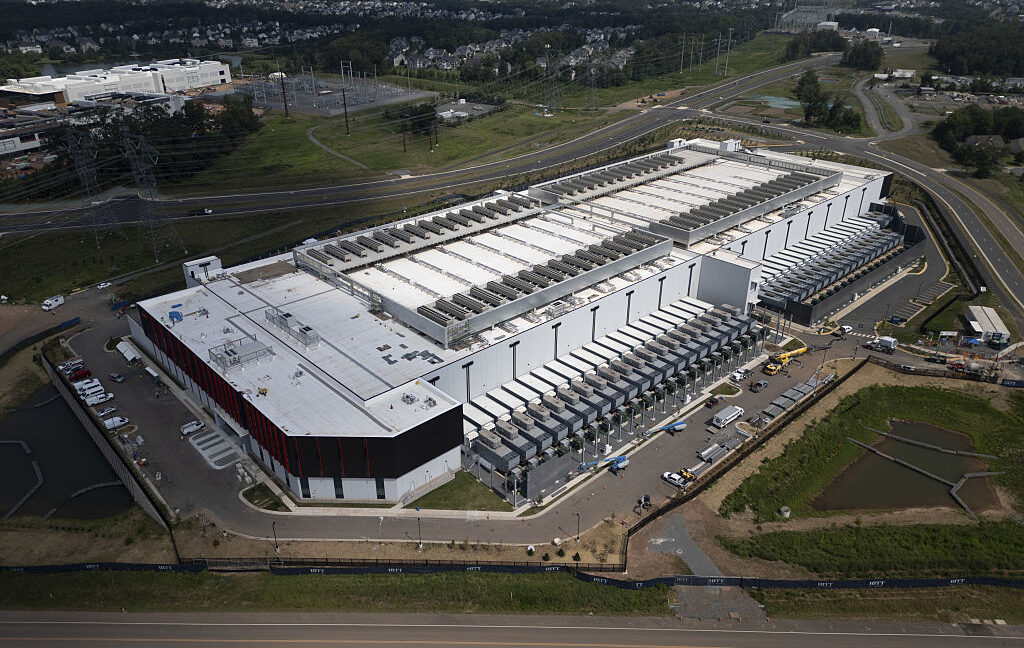
As AI revenues soar, a physical bottleneck emerges: TSMC warns of supply limits, data centers face water and power shortages, and tech giants are resorting to tents and fusion energy to keep the lights on.
The Physical Ceiling of the Digital Dream
The narrative of Artificial Intelligence has long been dominated by software milestones: the next model, the next parameter count, the next breakthrough in reasoning. But in 2026, the story has shifted decisively to the hardware beneath the code. The exponential growth of AI companies like Anthropic, which recently reported annualized revenue crossing $47 billion, is colliding with the linear reality of physics. We are witnessing the onset of a severe infrastructure crisis where the demand for compute power is outstripping the global capacity to generate electricity, manufacture chips, and cool servers.
The disconnect between financial ambition and physical capability is becoming impossible to ignore. While executives shrug off doubts about AI's returns, the engineers on the ground are facing a supply chain that is stretched to its breaking point. From the deserts of Utah to the semiconductor fabs of Taiwan, the race for AI dominance is no longer just about algorithms; it is a brutal competition for electrons, water, and silicon.
The Chip Bottleneck: TSMC's Warning
At the heart of this crisis lies the semiconductor supply chain. Taiwan Semiconductor Manufacturing Co. (TSMC), the world's largest chipmaker, has issued a stark warning to its investors and customers. Despite aggressive factory buildouts in the United States, the company admits it cannot keep up with the insatiable demand from American tech giants.
"Customer demand is so high, and we can only support so much," TSMC CEO C.C. Wei stated after a recent shareholder meeting.
This admission marks a pivotal moment. For years, the assumption was that capital investment could instantly translate into capacity. TSMC's struggle suggests otherwise. The complexity of advanced node manufacturing, combined with the sheer volume of orders for AI-specific accelerators, has created a bottleneck that money alone cannot solve quickly. This supply constraint threatens to slow the deployment of the very models driving the current economic boom, creating a paradox where the most valuable companies in the world may be held back by the most basic physical constraints.
Power, Water, and the Environmental Reckoning
Even if the chips were available, powering them presents a monumental challenge. Data centers are notorious energy hogs, and their thirst for water for cooling systems has sparked a new wave of environmental scrutiny. Hyperscalers are under intense pressure regarding their impact on local water quality and availability. As reported by Ars Technica, operators are scrambling to tackle water usage problems, implementing advanced cooling technologies and recycling systems to mitigate their ecological footprint.
The energy demand is so acute that it is forcing a re-evaluation of traditional infrastructure planning. The conventional approach of building massive, permanent concrete facilities is being disrupted by the sheer speed of AI deployment. The timeline for securing power contracts and environmental permits often spans years, while the market moves in months.
This friction between rapid deployment and environmental regulation is visible in the political sphere. In Utah, Kevin O'Leary, the "Shark Tank" star, recently agreed to halve the size of his planned 40,000-acre data center project. Facing mounting pressure from residents and activists concerned about water and land use, O'Leary sent a letter to state officials confirming the removal of nearly 20,000 acres from the project. This concession highlights a critical reality: the community backlash against massive infrastructure projects is becoming a hard constraint on expansion.
The Pivot to Unconventional Solutions
Faced with these rigid constraints, tech giants are pivoting to unconventional, almost desperate solutions. Meta has adopted a tactic pioneered by Tesla: building data centers inside tents. These modular, tent-like structures allow for rapid deployment and can be situated closer to power sources or in temporary zones where permanent construction is too slow or politically fraught. It is a pragmatic, albeit temporary, acknowledgment that the traditional path to infrastructure is too slow for the AI era.
"Meta may have found one way to slash its massive data center bill: tents," notes TechCrunch, highlighting the shift toward agility over permanence.
However, tents are a stopgap. The long-term solution requires a revolution in energy generation itself. This has brought nuclear fusion back from the realm of science fiction into the realm of urgent business strategy. Helion Energy, a fusion startup backed by Sam Altman, recently raised $465 million with a specific mandate: to build a power plant for Microsoft by 2028. This is not merely a research project; it is a commercial contract driven by the immediate need for carbon-free, baseload power that can fuel massive AI clusters without depleting local grids.
The involvement of Microsoft and the backing of industry titans signal that the energy sector is no longer a passive utility but an active bottleneck in the AI value chain. If fusion can deliver on its promise, it could unlock the next decade of AI growth. If it fails, the industry faces a potential plateau where the cost of energy makes scaling economically unviable.
The Economic Paradox
The juxtaposition of these developments creates a fascinating economic paradox. On one hand, companies like Anthropic are reporting revenue trajectories that suggest an endless boom. Daniela Amodei, Anthropic's CEO, has publicly shrugged off doubts about the industry's returns, citing a trajectory that grew from roughly $9 billion to $47 billion in a matter of months.
Yet, on the other hand, the physical world is pushing back. The supply chain is choked, the power grid is straining, and the environment is reaching its limits. The $47 billion revenue figure is impressive, but it is predicated on the ability to continue scaling. If TSMC cannot supply chips, if Helion cannot deliver fusion power, and if communities block data centers, the financial models begin to crumble.
This tension suggests that the AI industry is entering a "great filter" phase. The companies that survive will not necessarily be those with the best algorithms, but those that can navigate the complex web of logistics, energy procurement, and environmental compliance. The era of "move fast and break things" is ending for infrastructure; the new era demands "build slow, build sustainable, and build strategically."
Conclusion: The Era of Physical Constraints
The AI revolution is no longer a purely digital phenomenon. It is a physical one, grounded in the dirt, water, and electrons of the real world. The next few years will be defined by how effectively the industry can solve these infrastructure crises. Will fusion power come online in time? Can modular tent-data centers bridge the gap? Or will the physical limits of our planet force a recalibration of the AI boom?
The answers to these questions will determine whether the current growth trajectory is a sustainable future or a speculative bubble waiting to burst. For now, the race is on, but the finish line is no longer defined by code—it is defined by the limits of our infrastructure.
Sources
- Ahead of its IPO, Anthropic’s Daniela Amodei shrugs off doubts about AI’s returns
- Meta steals a tactic from Tesla and builds data centers in tents
- Helion, the Sam Altman-backed fusion startup, raises $465M to build a power plant for Microsoft
- Kevin O’Leary agrees to downsize massive Utah data center
- TSMC struggles to keep up with AI demand: ‘We can only support so much’
- How some data center operators are tackling their water use problems