The Great AI Pivot: From Capital Rallies to the Era of Compliance and Oversight

As Alphabet secures a record $85B in funding and Lovable expands its cloud footprint 5x, the AI narrative is shifting from pure growth to rigorous oversight. New UK regulations force Google to let publishers opt out, while US security gaps and the rise of monitoring tools signal a new reality: the era of unbridled AI expansion is over.
The Great AI Pivot: From Capital Rallies to the Era of Compliance and Oversight
The artificial intelligence sector is reaching a critical inflection point. For years, the narrative was defined by a singular metric: scale. It was a story of infinite growth, where capital flowed freely to build larger models and deploy them faster than regulation could catch up. However, the landscape in mid-2026 reveals a starkly different reality. We are witnessing a profound pivot from capital rallies to compliance and oversight. The days of "move fast and break things" are colliding with the hard constraints of legal frameworks, operational reliability, and ethical accountability.
The Capital Surge: A Signal of Confidence or Hubris?
The financial momentum behind AI remains undeniably potent, yet the context has shifted. Alphabet recently executed a record-breaking $85 billion stock sale specifically earmarked for its AI business. As noted in recent analysis, this massive raise is a "helluva good signal" regarding investor appetite. It suggests that the market still believes the long-term thesis of AI is intact, even as the short-term turbulence mounts.
This capital influx is not merely sitting in treasury accounts; it is being deployed aggressively into infrastructure. In a significant move, the AI platform Lovable has signed a multi-year deal with Google Cloud, a partnership that will expand its cloud footprint by five times. This agreement also includes expanded access to Anthropic's Claude models. This 5x expansion is not just a technical upgrade; it is a strategic bet on the necessity of robust, compliant infrastructure to support the next generation of AI agents.
"The $85 billion raise signals that investors are ready to chow down on AI offerings, but the question is no longer just about growth—it's about sustainability."
While the money is pouring in, the underlying assumption is changing. Investors are no longer just funding model training; they are funding the operational layer required to make these models viable in the real world. The capital is shifting from the "brain" of the AI to the "nervous system" that ensures it functions without causing chaos.
The Regulatory Hammer: UK Sets the Global Standard
If capital is the fuel, regulation is now the steering wheel. The most significant development in this shift comes from the United Kingdom, where regulators have issued a decisive order to Google. After the tech giant claimed that users did not want "lots of sources" in AI search results, the UK regulator ordered Google to put clearer links in AI Overviews and, crucially, to let UK publishers opt out of having their content used in generative AI search.
This ruling is a watershed moment. It dismantles the narrative that AI companies can unilaterally decide how content is consumed and monetized. The requirement to offer an opt-out tool is being tested in the UK before a planned global rollout. This sets a precedent that publishers will have the power to control their digital destiny in the age of AI. It forces a re-evaluation of the value chain: if content creators can opt out, the data moat that AI companies have built begins to erode, necessitating new business models that respect creator rights.
This regulatory pressure is not isolated to the UK. It represents a global trend where governments are intervening to ensure that AI development does not come at the expense of the very ecosystem that feeds it. The era of "fair use" as a blanket defense is ending; the era of explicit consent and transparency is beginning.
The Security Paradox: Policy vs. Reality
While regulators tighten the noose on content rights, the United States faces a different, more dangerous challenge: the gap between policy ambition and security reality. A recent executive order from the Trump administration aimed to test AI models for safety and security. However, critics argue this plan is short-sighted and performative.
The core issue? US security teams were gutted by the Department of Government Efficiency (DOGE). With the very personnel tasked with auditing and securing these systems decimated, the executive order risks becoming a hollow gesture. Without the human expertise to interpret complex model behaviors or to audit the code, even the most well-intentioned regulations cannot prevent dangerous deployments.
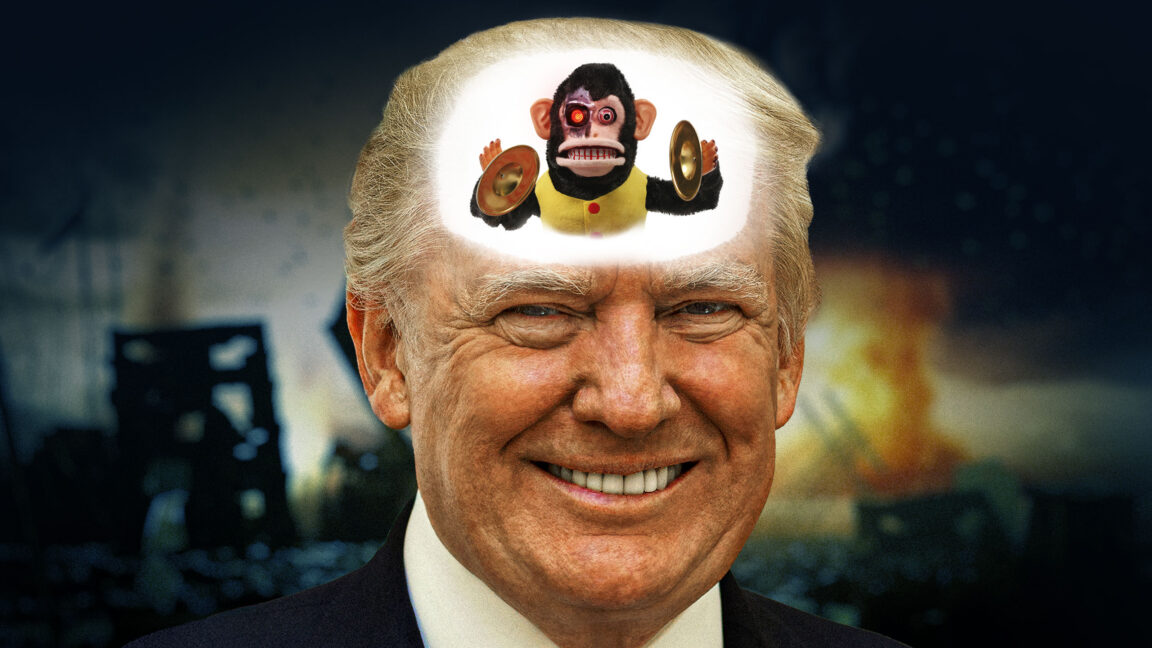
This creates a dangerous paradox: the government is demanding safety while simultaneously dismantling the infrastructure required to verify it. This highlights a critical vulnerability in the current AI landscape. Safety cannot be legislated; it must be engineered and monitored. If the human layer of oversight is removed, the risk of catastrophic AI failures increases exponentially, regardless of the number of executive orders signed.
The Rise of the Monitoring Layer: Betting on Reliability
In response to these regulatory and security challenges, a new sector of the AI economy is emerging: AI observability and monitoring. As AI systems move from experimental labs into critical production environments, the need to watch, troubleshoot, and manage them has become paramount.
Coralogix recently raised $200 million on a bold bet: someone needs to watch the AI agents. This funding round underscores a growing consensus that as AI agents gain autonomy, the complexity of their operations will outstrip human ability to manage them manually. Coralogix and similar infrastructure firms are betting that demand will rise for tools that can provide the operational data needed to keep AI systems running reliably.
This is the logical next step in the AI maturity curve. Just as DevOps became essential for software, AI Ops is becoming essential for intelligence. Companies are realizing that a powerful model is useless if it hallucinates, leaks data, or behaves unpredictably in production. The $200 million investment in Coralogix signals that the market is now valuing the "guardrails" of AI as highly as the engines.
"As AI systems move into production, demand will rise for tools that can monitor their behavior, troubleshoot failures, and provide the operational data needed to keep them running reliably."
The Economic Reality: Monetization Meets Compliance
The convergence of these trends is reshaping the economic model of AI. Meta’s recent global rollout of its AI agent for WhatsApp Business illustrates this shift. Unlike the free tools of the past, Meta will charge businesses for using its AI agent based on token usage. This moves AI from a marketing gimmick to a billable utility.
This monetization strategy is only possible because the infrastructure is becoming stable enough to charge for. However, it also means that businesses will be more sensitive to the reliability and compliance of these tools. If an AI agent generates a compliance violation or a PR nightmare, the cost to the business will be immediate and tangible. This economic pressure will further drive the demand for the monitoring tools that Coralogix is building.
Conclusion: The Era of Responsible Scale
The narrative of AI is undergoing a fundamental transformation. We are moving away from the speculative frenzy of 2023-2024, where the only metric that mattered was model size, toward a more mature, grounded reality. The $85 billion capital raise and the 5x infrastructure expansion by Lovable show that the technology is still advancing rapidly. However, the UK regulations, the security gaps in the US, and the rise of monitoring firms signal that this growth can no longer be unchecked.
The future of AI will not be defined by who has the biggest model, but by who can build the most reliable, compliant, and monitored systems. The companies that succeed will be those that treat AI not as a magic wand, but as a complex industrial system requiring rigorous oversight. As we look forward, the question is no longer "Can we build it?" but "Can we trust it?" The answers to that question will determine the next decade of the tech industry.
The pivot is complete. The era of compliance and oversight has arrived, and it is reshaping the entire landscape of artificial intelligence.
Sources
- Lovable signs multi-year deal with Google Cloud to up usage 5x, source says
- Google ordered to put clearer links in AI search and let UK publishers opt out
- Alphabet’s record-breaking $85B raise for Google’s AI business is a helluva good signal
- Trump plan to test AI models has a problem—US security teams were gutted by DOGE
- Publishers will be able to opt out of AI Search, thanks to new regulation
- Meta’s AI agent for WhatsApp Business is now available globally
- Coralogix raises $200M on bet that someone needs to watch the AI agents