Beyond the Screen: The Billion-Dollar Bet on Physical Play and Orbital Dominance
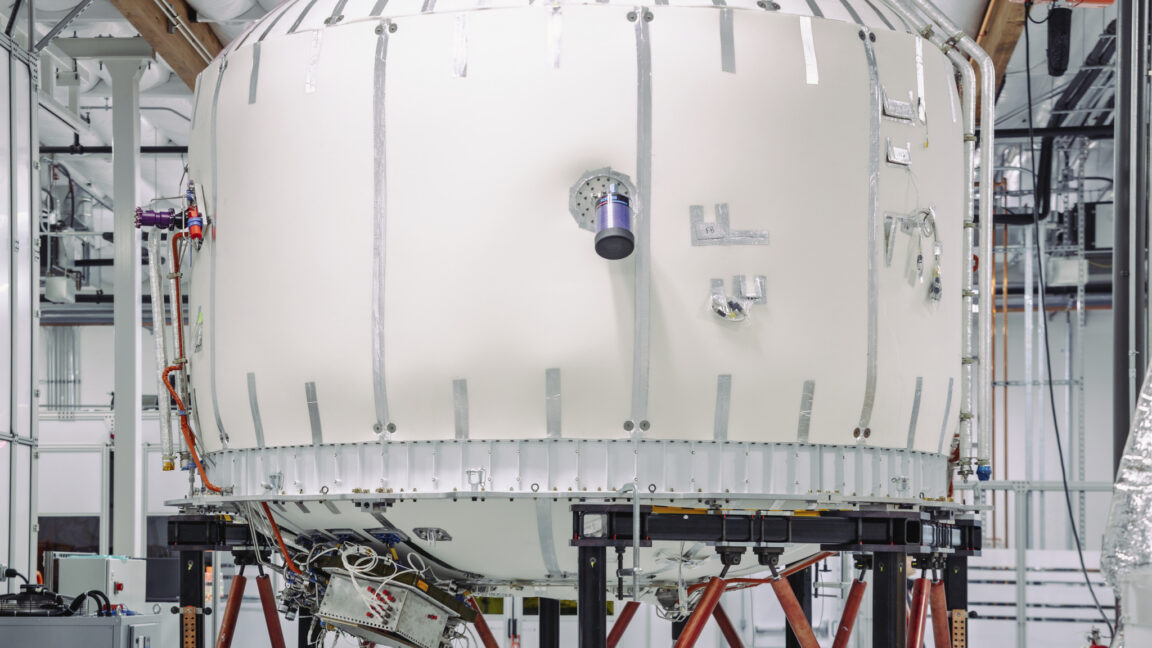
As the tech industry pivots, two distinct frontiers are emerging: the return of tangible, screenless play and a fierce, capital-intensive race for orbital maneuvering. From Lego's ambitious smart bricks to Impulse Space's $500M raise, the future of hardware demands human ingenuity over digital abstraction.
The Physical Renaissance: Why the Future of Tech is Getting Heavier
In an era dominated by generative AI, virtual reality headsets, and endless scrolling, the most exciting technological developments are paradoxically becoming more physical. We are witnessing a bifurcation in the hardware landscape: on one side, a resurgent demand for tangible, screenless experiences that reconnect us with the physical world; on the other, a high-stakes, billion-dollar race to master the vacuum of space. These two seemingly disparate movements share a common thread—a rejection of the purely digital abstraction in favor of engineering physical systems that require human touch, risk, and ingenuity.
The Screenless Revolution: Reclaiming Focus
The fatigue with screens is no longer a niche sentiment; it is a market driver. The resurgence of analog-style digital photography exemplifies this trend. Camp Snap, a company dedicated to screenless hardware, recently unveiled the Camp Snap 2. This device is not merely a camera; it is a philosophical statement against the algorithmic curation of our visual lives.
Unlike its predecessors or modern smartphones, the Camp Snap 2 strips away the immediate gratification of a digital preview. It offers a slimmer design, faster performance, and a suite of filters, but crucially, it forces the user to trust the process. As noted in recent coverage, the device returns to the company's roots, inspired by the tactile joy of retro Super 8mm film cameras but updated with modern digital sensors. The absence of a screen means there is no "kid lock" to bypass, no social media feed to scroll, and no digital perfectionism to hinder creativity.
"The market is finding that the joy of photography lies in the act of capturing, not the act of editing."
This philosophy extends beyond photography into the realm of play. Lego, the undisputed king of physical construction, attempted to bridge the gap between tactile building and digital interaction with its Smart Play line. Initially, the technology promised a revolution in how children interacted with their toys, integrating sensors and apps to allow Pokémon and Star Wars figures to train and battle digitally. However, the reception has been mixed. While the technology is impressive, critics argue that the execution often boils down to a few repetitive interactions, failing to deliver the deep, open-ended creativity that defines the Lego brand.
The lesson here is nuanced. The market wants screenless hardware, but it also demands meaningful interactivity. A smart brick that merely mimics a screen experience is a failure; a smart brick that enhances the physical build without dominating it is a success. The challenge for manufacturers like Lego and Camp Snap is to create devices that feel like tools of the future while retaining the soul of the past. They must prove that physical interaction can be as dynamic as digital code, without succumbing to the distraction of the screen.
The Orbital Gold Rush: Capital and Human Talent
While toy manufacturers and camera makers refine the physical experience on Earth, a far more dangerous and expensive physical revolution is unfolding in low Earth orbit. The space industry is currently experiencing a funding boom that dwarfs even the dot-com era, driven by a critical shift from simple launch services to orbital maneuvering.
Impulse Space, a startup focused on electric propulsion systems for satellites, recently secured a staggering $500 million in funding. This injection of capital signals a fundamental change in the space economy. The era of launching a satellite and letting it drift until its fuel runs out is over. The future belongs to constellations that can actively maneuver, change orbits, and perform on-orbit servicing. As one industry observer noted, "The market's going to continue to find exciting new things," referring to the complex logistics of managing thousands of moving assets in the sky.
What makes the Impulse Space raise particularly telling is the stated intent of the funds. In an age where every other tech startup is rushing to replace human workers with AI, Impulse Space President Eric Romo made a counter-intuitive declaration: this money will be used to hire people, not AI.
"Engineering physical systems still depends on human talent."
This statement cuts to the core of the current tech zeitgeist. While software can be iterated by algorithms, the laws of physics are unforgiving. Designing a rocket engine, calibrating a satellite's thruster, or ensuring a launchpad survives an explosion requires a depth of human judgment that AI cannot yet replicate. The physical constraints of space—gravity, thermal dynamics, and the vacuum—demand a level of precision and intuition that only experienced engineers can provide.
The stakes are incredibly high. Blue Origin, another titan in the sector, recently faced a setback with an explosion on its launchpad in Florida. CEO Dave Limp has indicated that while the damage to the launchpad was not as severe as initially feared, the company is still investigating the cause. Blue Origin plans to relaunch its New Glenn rocket later this year. This incident underscores the brutal reality of the physical space race: unlike software, where a bug can be patched overnight, a physical failure can cost hundreds of millions of dollars and years of development time.
The Convergence: Human Ingenuity in a Physical World
The connection between the screenless camera on a child's desk and the rocket engine in a Florida launchpad is profound. Both represent a shift away from the "software eats the world" narrative that dominated the last decade. We are entering an era where hardware matters again.
Whether it is the tactile click of a Lego brick, the mechanical shutter of a screenless camera, or the roar of a New Glenn rocket, the common denominator is physicality. These technologies cannot be simulated perfectly in a digital twin; they must be built, tested, and refined in the real world. They require human hands to assemble, human eyes to inspect, and human minds to troubleshoot.
The $500 million raised by Impulse Space is a vote of confidence in human engineering. It suggests that investors have realized that the next frontier of innovation is not in optimizing an app, but in mastering the physical universe. Similarly, the mixed but persistent efforts of companies like Lego and Camp Snap indicate a consumer desire for products that exist outside the screen.
The implications for the broader tech industry are significant. We may see a resurgence in "slow tech"—hardware that is built to last, designed to be understood, and engineered to interact with the real world rather than a virtual one. The race for orbital dominance will require a new generation of engineers who understand both the digital control systems and the brutal realities of physics.
Conclusion: The Weight of the Future
As we look toward the future, the narrative of technology is changing. It is no longer about how thin we can make a phone or how fast we can generate an image. It is about how we can build systems that interact with the physical world in meaningful, reliable, and awe-inspiring ways.
From the quiet joy of a screenless photo to the thunderous launch of a rocket, the future of tech is getting heavier, more tangible, and more human. The billions flowing into space startups and the renewed interest in analog-style hardware suggest that we are finally ready to put down our screens and pick up the tools of creation once again. In a world of infinite digital possibilities, the most valuable resource is no longer code—it is the physical reality we can touch, build, and explore.
The physical future is here, and it is demanding our full attention, our human ingenuity, and our willingness to get our hands dirty.
Sources
- Lego’s Smart Play Pokémon can train and battle, but don’t do the one thing I wish they could
- The screenless Camp Snap 2 is slimmer and comes with more filters
- Blue Origin plans to launch New Glenn again this year after explosion
- Impulse Space raises $500 million as orbital maneuvering race heats up
- Rocket engine startup Impulse raises $500 million to hire people, not AI