The Nvidia RTX Spark: Windows' M1 Moment or a Premium Trap?
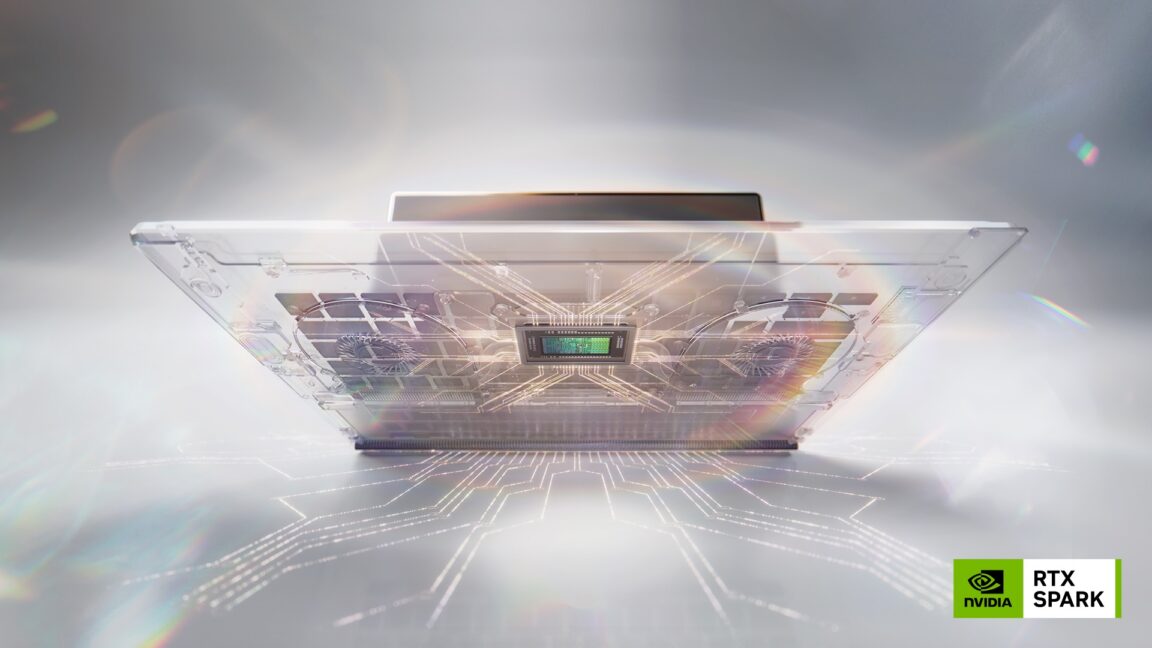
Nvidia's entry into the consumer laptop chip market with RTX Spark promises to shatter Windows on Arm's performance ceiling, but at a steep price. While Microsoft's new Surface Laptop Ultra aims to rival the MacBook Pro, Intel's cooler, cheaper AI chips loom as a potential disruptor.
The Nvidia RTX Spark: Windows' M1 Moment or a Premium Trap?
For years, the narrative surrounding Windows on Arm has been one of promise unfulfilled. Qualcomm's Snapdragon chips offered impressive battery life, yet the performance ceiling remained frustratingly low for power users, creating a distinct gap between the experience on macOS and Windows. That dynamic is about to shift dramatically with the announcement of Nvidia's RTX Spark. This is not merely a new processor; it is a fundamental reimagining of the Windows PC architecture, potentially delivering the long-awaited "M1 moment" for the world's most popular operating system.
The Architecture of a New Era
The core of Nvidia's strategy lies in the integration of an Arm-based CPU, a dedicated RTX GPU, and unified memory into a single system-on-chip (SoC). According to reports from Ars Technica, this architecture mirrors the efficiency that Apple achieved with the M-series chips, allowing the CPU and GPU to share the same high-bandwidth memory pool without the latency penalties of traditional discrete setups.
This move signals a departure from the traditional laptop market, where Nvidia has historically focused solely on high-performance graphics cards. By entering the consumer laptop chip space, Nvidia is effectively challenging the duopoly of Intel and AMD on the x86 side, while simultaneously taking aim at Apple's dominance in the premium Arm segment. The initial rollout targets laptop workstations and mini desktop PCs, sectors where the combination of raw compute power and AI acceleration is critical.
The Surface Laptop Ultra: A Direct Rival to Apple
Microsoft is already leveraging this silicon to launch its most ambitious device yet: the Surface Laptop Ultra. As highlighted in recent industry briefings, this device is explicitly positioned as a rival to the MacBook Pro. By pairing the RTX Spark's unified memory architecture with Windows 11's native Arm support, Microsoft aims to solve the emulation bottlenecks that have historically plagued Windows on Arm devices.
The implications are profound. For the first time, Windows users can expect a device that offers Mac-level battery life without sacrificing the ability to run heavy creative workloads or local AI models. The Verge notes that while Apple proved Arm chips could deliver incredible performance and battery life, the Windows world has struggled to match up under Qualcomm chips. Nvidia's entry changes the math entirely, suggesting that the "Windows on Arm" era is finally transitioning from a niche experiment to a mainstream powerhouse.
The Price of Revolution
However, this technological leap comes with a significant caveat: cost. As The Verge aptly warns, "This could be Windows' M1 moment — but expect it to cost a ton." The engineering required to integrate high-end RTX graphics and Arm processing into a single package is expensive. Early indications suggest that devices powered by RTX Spark will be positioned in the ultra-premium tier, likely priced well above current flagship laptops.
This pricing strategy raises questions about accessibility. Will RTX Spark remain a niche product for creative professionals and enterprise workstations, or will it eventually trickle down to the mass market? The high cost could initially limit adoption, potentially allowing competitors to gain ground in the mid-range sector.
The Intel Counterpunch: Crescent Island
Just as Nvidia makes its grand entrance, Intel is preparing a strategic counterpunch. In a surprising move, Intel has announced its upcoming Crescent Island chip, which promises to be cheaper, run cooler, and offer a competitive AI alternative to both Nvidia and AMD. Unlike the high-performance focus of RTX Spark, Crescent Island is designed as an air-cooled chip utilizing LPDDR5 memory, targeting a broader, more cost-conscious market.
Intel's assertion that their chip will run cooler and cheaper than Nvidia's options highlights a growing divergence in the market. While Nvidia aims for the high-end creative and AI workstation segment with RTX Spark, Intel is positioning itself to defend the mainstream market with efficiency and affordability. This creates a fascinating three-way battle: Apple's M-series (established efficiency), Nvidia's RTX Spark (peak performance/AI), and Intel's Crescent Island (value and thermal efficiency).
Expert Perspective: The AI Implications
The true battleground here is not just raw performance, but AI at the edge. Both Nvidia and Intel are betting that the future of computing lies in on-device AI processing. Nvidia's RTX Spark brings the full weight of the RTX platform to the laptop, including Tensor cores optimized for generative AI and local large language models (LLMs). This makes it a compelling choice for developers and data scientists who need to run heavy models locally without cloud latency.
However, the market is complex. As one industry analyst noted, "The winner won't be the company with the fastest chip, but the one that offers the best ecosystem integration." Nvidia's strength lies in its software stack, CUDA, and the massive developer community already built around it. Yet, Intel's push for lower power consumption and lower cost addresses the thermal and battery constraints that have historically hindered high-performance Arm chips.
Conclusion: A Fractured but Exciting Future
The arrival of the Nvidia RTX Spark marks a pivotal moment for the PC industry. It validates the Arm architecture as a viable, high-performance alternative to x86, potentially ending years of stagnation for Windows on Arm. With Microsoft's Surface Laptop Ultra leading the charge, we are witnessing the birth of a new category of device that bridges the gap between mobile efficiency and desktop power.
Yet, the path forward is not without challenges. The high price point of RTX Spark devices may limit their immediate impact, while Intel's Crescent Island offers a compelling alternative for those prioritizing value and thermal management. As the dust settles, one thing is clear: the era of the "good enough" laptop is over. The future belongs to devices that can run complex AI models locally, deliver all-day battery life, and handle professional workloads with ease. Whether that future is powered by Nvidia's silicon, Intel's efficiency, or Apple's ecosystem remains to be seen, but the revolution has undeniably begun.
"The Windows on Arm era is finally transitioning from a niche experiment to a mainstream powerhouse."
As we look toward 2026 and beyond, the competition between these tech giants will likely drive rapid innovation, forcing prices down and performance up. For consumers, the wait for a truly great Windows laptop may finally be over.
Sources
- This could be Windows’ M1 moment — but expect it to cost a ton
- Nvidia RTX Spark comes to Windows PCs with Arm CPU, RTX GPU, and unified memory
- Intel: Our upcoming AI chip will be cheaper, run cooler than Nvidia, AMD options
- Microsoft builds MacBook Pro rival with NVIDIA-powered Surface Laptop Ultra
- Nvidia RTX Spark